Making visual arts work count in the 2026 Census
Census night is Tuesday 11 August 2026.
Census night is Tuesday 11 August 2026.
As governments increasingly recognise that art is work, it is more important than ever that Australia's data accurately reflects the visual arts workforce. On Tuesday 11 August, millions will complete the 2026 Census. For the visual arts sector, it is an opportunity to build a clearer picture of Australia's artists, craft practitioners, designers and arts workers.
For many years, NAVA has advocated for improved national data collection because the visual arts workforce has never been adequately reflected in official statistics. Existing datasets generally rely on a person's 'main job', making it difficult to capture artists who sustain their practice through multiple sources of work and income. Recent research from the Visual Arts Work project, led by RMIT University, found that this has significantly underestimated the size of the visual arts workforce, making it more difficult to demonstrate the sector's contribution and advocate for appropriate policy responses.
Occupation data is collected based on a person's main paid job in the week before Census night, rather than their broader professional practice or career. Many artists combine creative practice with teaching, arts administration or work in other industries. Others may have spent significant time on their arts practice during the week without receiving payment. While the Census cannot capture the full complexity of artists' working lives, providing clear and specific responses helps ensure visual arts work is better represented in Census data.
Governments, researchers and funding bodies all rely on Census data when making decisions about the arts workforce. Recent changes to Australia's Occupation Standard Classification (OSCA), following the most significant review of occupational classifications in more than twenty years, provide greater recognition for some visual arts occupations. NAVA contributed to that review, advocating for changes that better reflect visual arts work and practice. While many of NAVA's recommendations could not be adopted because of international classification standards, the changes made represent worthwhile progress.
The way you describe your occupation also matters. Census responses are coded into occupational categories using the information people provide. The Design Institute of Australia's Write DESIGNER campaign encourages designers to use accurate occupational descriptions in the Census.
NAVA encourages artists, craft practitioners and arts workers to take the same care when describing their work. If your main paid job in the week before Census night is in the visual arts, describe your occupation as specifically as possible. Generic job titles such as artist, administrator, educator, coordinator, manager or director are used across many industries. Instead, use a description that reflects your work in the visual arts, such as visual artist, craft practitioner, designer, art gallery curator, art museum registrar, art gallery technician or visual arts administrator. Where relevant, also describe your industry accurately (for example, visual arts, museums or galleries). More specific responses help ensure visual arts occupations are better identified in national data.
The Census also asks about unpaid voluntary work undertaken in the previous 12 months. If you have volunteered with artist-run initiatives, festivals, museums, galleries or other arts organisations, recording those contributions helps demonstrate the significant unpaid labour that supports the visual arts ecology.
The way you answer the questions about occupation, industry and volunteering can make a difference to how the visual arts workforce is represented in Australia's national data.
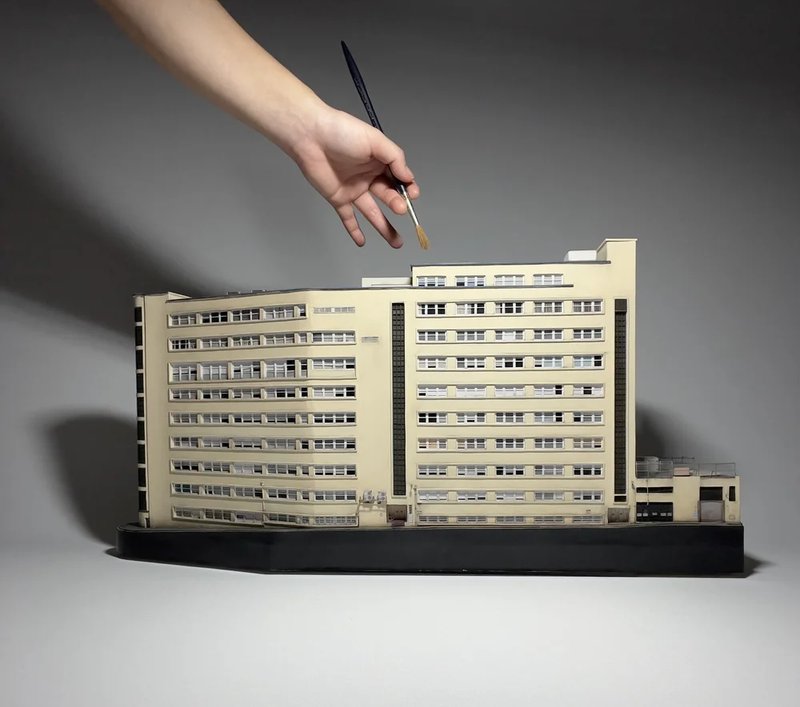
Mylyn Nguyen, Sydney Dental Hospital, 2024. Pencil, pastel, gouache, paper, plastic, tulle
H 31.5cm x W 64.5cm x D 14.3cm
ID: A hand holding a paintbrush over the top of a miniature of the Sydney Dental Hospital made from paper, the lighting throughs a shadow behind the building, the background is grey card.



© Copyright 2026. All Rights Reserved.