Tax reform for artists in Australia's next National Cultural Policy
With the new policy expected in the coming months, NAVA is encouraging artists and arts workers to raise the need for tax reform with their federal representatives.
With the new policy expected in the coming months, NAVA is encouraging artists and arts workers to raise the need for tax reform with their federal representatives.
Canadian Prime Minister Mark Carney recently announced plans for a new tax credit to support artists, as part of a broader investment in Canada's arts and cultural sector. The proposed Canada Creative Credit would provide tax relief on up to C$45,000 of qualifying annual net income from original creative work. The details are still being developed, but the announcement is a welcome recognition of the value of artists' work and the important contribution the arts make to society.
It is always encouraging to hear governments speak about their commitment to supporting artists, and to see that reflected in policy. Australia's National Cultural Policy, Revive, endorsed NAVA's Code of Practice and committed to recognising artists as workers. There have been some practical improvements, including changes to Workforce Australia's mutual obligation requirements that allow artists and arts workers receiving unemployment payments to earn points through professional activities such as applying for grants, submitting exhibition proposals and meeting with curators. However, much more needs to be done to improve artists' incomes and working conditions.
As the Australian Government prepares to release its next National Cultural Policy in the coming months, Canada's announcement provides a timely opportunity to renew attention on how tax reform could better support artists here.
NAVA has advocated for tax reform for artists for more than 30 years. Following an eight-year campaign led by NAVA and the wider arts sector, the Australian Taxation Office introduced a ruling in 2005 recognising the distinctive nature of being in business as a professional artist, including the importance of reputation building and developing audiences and markets. NAVA also helped secure income averaging provisions that recognise artists' irregular earnings. More recently, NAVA advocated for the $20,000 instant asset write-off to be retained and expanded, and the Australian Government made it permanent from 1 July 2026. This allows eligible small businesses, including artists operating as sole traders, to immediately deduct the cost of eligible equipment and other business assets under $20,000. It can also encourage businesses to purchase original artworks for business use, supporting sales and income for artists.
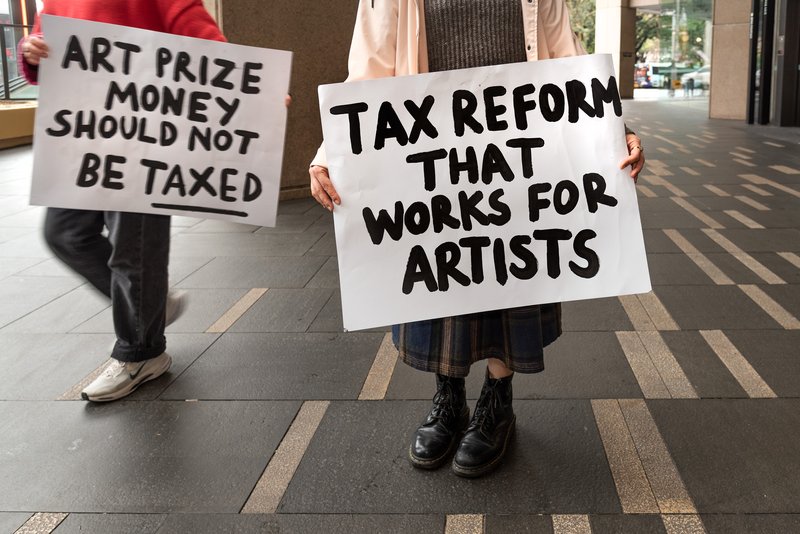
NAVA has put forward a range of tax reform recommendations through its submission on the next National Cultural Policy. NAVA is calling for art prizes, grants and fellowships to be exempt from income tax, so they provide the financial support they are intended to. NAVA also wants changes to the non-commercial loss rules, which can prevent artists from offsetting legitimate business losses against income from other employment, making it harder to manage the costs of maintaining a practice.
Other priorities include making income averaging easier to access, changing GST rules to better accommodate fluctuating earnings, and reforming HECS/HELP repayments so one unusually successful year doesn't leave artists with tax debts they're paying off for years. NAVA is also seeking expanded tax deductions for artist residencies, home-based studios and cultural expenses incurred by First Nations artists and arts workers, including travel to Country and meetings with Elders.
With the new policy expected in the coming months, NAVA is encouraging artists and arts workers to raise these issues with their federal representatives. Local MPs need to hear directly from artists and arts workers about how tax rules affect their work and income. When MPs across the country hear similar concerns from people in their electorates, it helps demonstrate the need for reform.
NAVA's Tax Reform Advocacy Toolkit provides information about NAVA's recommendations, practical advice for meeting with MPs and a template letter you can adapt and send to your local federal MP.
Photo by Garry Trinh, 2025.
ID: A photo of two people in a grey urban environment. They are holding large signs, one says TAX REFORM THAT WORKS FOR ARTISTS and the other says ART PRIZE MONEY SHOULD NOT BE TAXED.



© Copyright 2026. All Rights Reserved.