50 Years of Deadly #NAIDOC2026
As NAIDOC Week marks 50 Years of Deadly, NAVA reflects on the progress made and the changes still needed to sustain First Nations arts and culture.
As NAIDOC Week marks 50 Years of Deadly, NAVA reflects on the progress made and the changes still needed to sustain First Nations arts and culture.
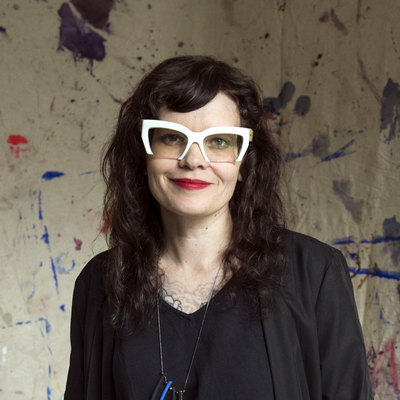
Matilda Nona is a proud Badhulgal/Maluyligal woman from Badhu Island, Torres Strait. Her works on paper engage with Torres Strait Islander stories, traditions and cultural practices, from new perspectives.
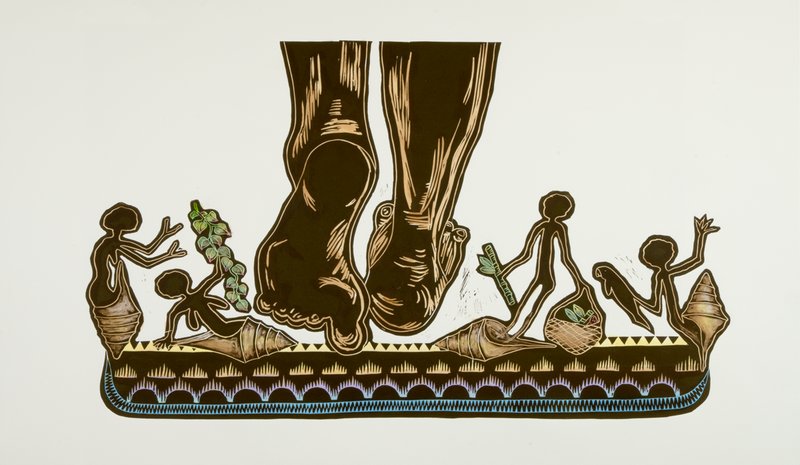
To celebrate 50 Years of Deadly, Matilda Nona’s linoprint, ‘Kaimelan Mab’, meaning ‘together we walk’, shares a story with many layers of the strength and continuity of Badhu culture and the ongoing journey of all Aboriginal and Torres Strait Islander peoples.
“The feet are our people now, those today, who walk the walk, talk the talk, and will continue to do so forever.”
Spirit figures emerge from the trumpet shells, a spiritual shell used to summon people, awaken people, and make noise! These spirit figures also represent all of the Elders who have passed, those who are still with us, always guiding us to continue speaking truth and passing down culture and knowledge.
“The four spirits each represent different parts - strength of our women and providing staple foods like the Sawurr vine (wild yam), the bamboo shoot representing young people, and the dugong for the carrying of tradition, our cultural practice and the rights to our story.”
Holding the feet and the reawakened spirits is the dugout canoe, carrying the journey of First Nations peoples from the past 50 years and the journey we have ahead of us. There is still a lot of work to do, but with our Elders, today's generations and our future young people, change will happen.
This year's NAIDOC Week, held 5–12 July, celebrates the theme 50 Years of Deadly, marking five decades of celebrating Aboriginal and Torres Strait Islander peoples, cultures and achievements, while honouring the generations of Elders, activists, artists and organisations who fought for visibility, rights and self-determination.
The anniversary is also an opportunity to reflect on the work that remains, as Aboriginal and Torres Strait Islander peoples continue to challenge racism and inequity, and defend the right to tell their stories on their own terms.
First Nations art and culture is more visible than ever, represented in major collections, exhibitions and festivals, and internationally recognised. Audiences continue to grow while governments, institutions and organisations increasingly look to First Nations artists, curators, cultural practitioners and community leaders for guidance, collaboration and leadership.
Yet recognition hasn’t been matched by adequate investment, support and structural change. Demand for First Nations art, culture and expertise is outpacing the workforce that sustains it. Across the continent, First Nations artists, arts workers, Elders and cultural knowledge holders carry significant responsibilities for cultural leadership, community engagement, mentoring, education and advice while art and culture centres and First Nations-led organisations face workforce shortages, rising costs, lack of infrastructure and climate change impacts.
These challenges were raised throughout NAVA's consultation on the next National Cultural Policy. Participants spoke about the need for leadership pathways, support for intergenerational knowledge sharing, and greater recognition of cultural knowledge, lived experience and community authority as forms of professional expertise. Concerns were also raised about increasing racism, cultural hostility and the silencing of artists and organisations engaging with issues such as colonisation, racism and truth-telling.
In response, NAVA has called for a national review of the visual arts, craft and design sector with a dedicated First Nations-led component to identify long-term workforce, infrastructure, cultural, environmental and economic sustainability needs across urban, regional and remote Australia; a co-designed National First Nations Visual Arts Workforce and Leadership Strategy, stronger support for Elders and cultural knowledge holders; investment in First Nations-led education and mentorship; and long-term planning for the sustainability of art and culture centres and First Nations-led organisations. NAVA has also advocated for greater recognition and remuneration of cultural labour, sustainable investment in First Nations arts and cultural infrastructure, dedicated implementation funding for Indigenous Cultural and Intellectual Property (ICIP), and stronger protections for artistic freedom and lawful expression.
NAVA is strengthening First Nations leadership within its own work through its First Nations Policy and Reconciliation Action Plan, the First Nations Outreach program, new educational resources that support meaningful engagement with First Nations cultures, and the establishment of a staged First Nations leadership pathway.
As we mark 50 Years of Deadly, there is much to celebrate in the achievements of the past, and much to consider in what is needed to sustain First Nations arts and culture into the future.
Matilda Nona, Badhulgal/Maluyligal, Kaimelan Mab, linoprint, 2026
ID: Linoprint depicting large feet walking in a dugout canoe, surrounded by spirits emerging from trumpet shells.
The National Association for the Visual Arts (NAVA) is a national organisation with staff who work across multiple states. The NAVA Board, and the artists, arts workers and organisations that we represent are based across hundreds of sovereign nations and unceded lands throughout the continent that has become colonially known as Australia.
NAVA acknowledges the Traditional Owners, Custodians and knowledge-holders of the unceded lands on which we live, learn, and work. We acknowledge Aboriginal and Torres Strait Islander peoples as the first artists and storytellers on this continent and pay respect to First Nations communities' ancestors and Elders. Sovereignty was never ceded. Always was, always will be Aboriginal land.



© Copyright 2026. All Rights Reserved.