NAVA recently made a submission to the Senate Inquiry into Productivity in Australia, arguing that the conditions under which artists and arts workers operate are central to any serious national productivity debate.
Across the visual arts, craft and design sector, funding cuts, reduced education pathways, heightened risk aversion and AI threats to intellectual property are changing working conditions.
Many galleries, peak bodies and independent organisations are absorbing the impact of unsuccessful multi-year funding applications, or reduced funding and tightening budgets. For artists, this shows up in smaller commissioning fees, fewer opportunities, and growing expectations that talks, panels and public programming around exhibitions will be delivered without proper pay. For arts workers, it can mean job losses, short-term contracts, heavier workloads and increased responsibility without additional remuneration.
Visual arts enrolments at secondary school remain strong. Young people continue to choose visual arts in significant numbers. But tertiary pathways are narrowing, courses are closing or being restructured, and fees are rising. Fewer affordable and stable training options mean fewer future educators, technicians, curators and practising artists entering the profession.
Artists are also reporting heightened caution around politically sensitive work. In a climate shaped by new hate laws and media controversy, some projects are being censored, modified, delayed or quietly dropped. Boards and venues are weighing risk more explicitly. Even when legislation is narrow, uncertainty affects decision-making.
Technology adds another layer. Many artists are using AI tools to support administration, drafting and editing. But there are real concerns about artworks being scraped without consent to train AI systems, as well as on copyright, attribution and Indigenous Cultural and Intellectual Property (ICIP). If technological productivity gains rely on using artists’ work without permission or payment, that’s theft, not innovation.
These issues shape the conditions of work.
Funding affects commissioning.
Education affects who can enter the profession.
Tax and superannuation rules affect whether artists can build long-term careers.
AI regulation affects whether artists retain control over their work.
Risk aversion affects artistic freedom.
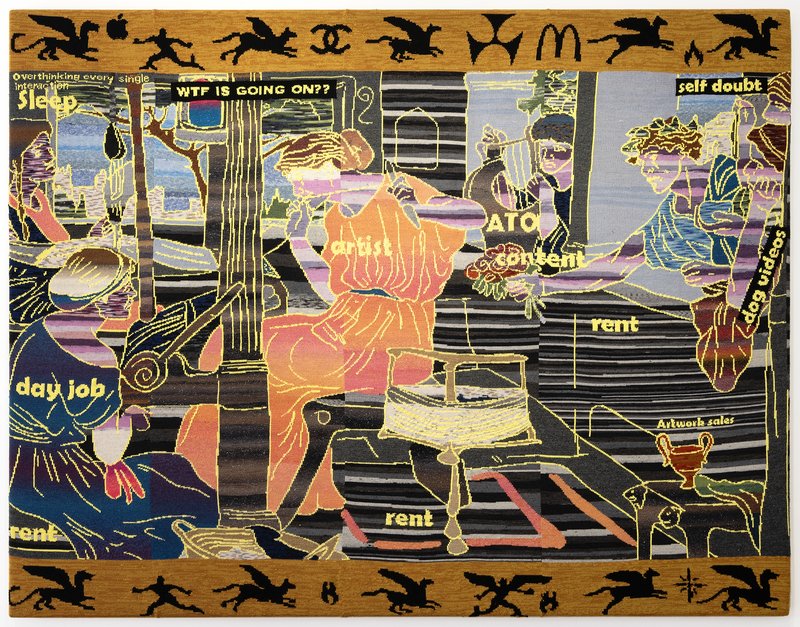
Research consistently shows that visual artists contribute significant economic and cultural value while earning well below national averages. Income is often irregular and project-based. Development time is frequently unpaid. Many artists combine creative practice with teaching or other work to remain viable.
When artists stop practising, or move out of the visual arts sector because they cannot make it work financially, Australia loses skill, experience and years of training. That is a workforce issue. Workforce sustainability sits at the heart of any serious productivity agenda.
The question is not whether the visual arts contribute. They do. Artists run small businesses, generate intellectual property, teach, design, research and contribute to tourism, digital industries and community life across metropolitan and regional Australia.
The question is whether current settings allow that contribution to continue and grow.
Productivity is often framed in terms of growth and efficiency. It should also ask whether skilled workers can remain in their field and build sustainable careers. If the conditions of work improve, productive capacity grows.
These pressures are systemic. Funding levels, regulatory settings, education pathways and legal frameworks all shape what organisations and artists are able to do. Individual arts organisations cannot solve structural underinvestment on their own.
At the same time, practical steps can strengthen the sector while broader reform progresses. Within existing budgets, organisations can prioritise artist fees and ensure exhibition-related labour is recognised and paid. Clearer guidance on existing tax and superannuation settings can reduce confusion and compliance stress. Better information for artists and arts organisations can support fairer decision-making and stronger backing for artists. And as AI regulation is reviewed, the sector can continue building shared understanding about risk, consent and responsible use.
National Cultural Policy consultation, when it opens, will be one pathway to address longer-term reform. But the underlying issue is immediate. The settings that shape artists’ working lives determine whether the workforce remains viable.
The conditions of work are not a side issue in the productivity debate.
They are the debate.