NAVA's Payment Standards to rise by 4.75% from 1 July 2026
The annual increase to the Payment Standards in NAVA’s Code will be implemented on 1 July 2026.
The annual increase to the Payment Standards in NAVA’s Code will be implemented on 1 July 2026.
Each year, NAVA reviews the Payment Standards in the Code of Practice for Visual Arts, Craft and Design (the Code) to ensure recommended fees and wages remain current and responsive to changes in the broader economy.
From 1 July 2026, most rates in NAVA’s Payment Standards will increase by 4.75% in line with the Fair Work Commission's (FWC) Annual Wage Review 2026 decision.
On 2 June 2026, the FWC announced increases to minimum and award wages, including a 4.75% increase to award wages and a 6% increase to the National Minimum Wage.
NAVA’s Payment Standards are an important benchmark for remuneration across the visual arts, craft and design sector, covering artists, arts workers and organisations operating in a wide range of contexts. In recent years, NAVA has applied annual increases below the Fair Work Commission’s award wage determinations in recognition of the funding environment across the visual arts sector, where many government funding programs and multi-year funding agreements receive no indexation and others receive increases that fall well below growth in wages and operating costs. While this approach sought to support implementation of the Payment Standards across the sector, it has also contributed to a growing gap between recommended rates in the visual arts sector and wage growth experienced by workers covered by modern awards.
This year's increase reflects NAVA's commitment to the principle that artists and arts workers should benefit from wage increases in the same way as workers in other industries. It is also consistent with commitments in Revive to recognise art as work and artists as workers.
The updated rates will apply to new contracts, agreements and engagements entered into from 1 July 2026. Existing contracts and agreements entered into before that date may continue at the rates agreed when those arrangements were made.
NAVA recognises that many exhibitions, commissions and touring projects are planned and budgeted well in advance. This challenge is particularly acute for touring projects, where artist fees may be locked into funding agreements several years before presentation and funding levels remain fixed despite annual increases in wages and artist fees.
As the Payment Standards are reviewed annually, organisations should incorporate current rates and anticipated indexation into future budgets, contracts and funding applications wherever possible. The annual review of the Payment Standards means that organisations should anticipate future increases when developing multi-year budgets, funding applications and project plans.
This is particularly important ahead of the next round of multi-year funding applications. NAVA encourages organisations to budget for annual indexation over the life of multi-year projects and funding agreements and will continue to advocate for government funding programs to provide indexation that reflects increases in artist fees, wages and operating costs.
The Code’s Payment Standards cover a wide range of recommended fees, from new work commission fees, loan fees, artists talks and workshops rates, as well as wages for arts workers in salaried and contract roles. The Performance Fees and Allowances sections will also reflect changes flowing from the FWC decision and updates to relevant industrial instruments including the Live Performance Award.
Organisations engaging artists and arts workers are encouraged to review their fee schedules, budgets, contracts and payment practices accordingly.
Alongside the updated Payment Standards, additional Auslan resources and new guidance supporting parents, carers and support workers will be added.
The need for sustainable funding
Annual increases to the Payment Standards are an important part of improving remuneration across the visual arts, craft and design sector, but they do not address the broader funding pressures experienced by artists and organisations. Artists continue to experience some of the lowest incomes in Australia, while galleries, museums, artist-run initiatives, First Nations art and culture centres and service organisations face rising operating costs. At the same time, many government funding programs and multi-year agreements continue to provide no indexation or increases that fall below growth in wages and operating costs.
In its submission to consultation on the next National Cultural Policy, NAVA called for meaningful indexation across all forms of multi-year operational funding and recommended that governments apply indexation that reflects increases in artist fees, wages and operating costs. NAVA continues to advocate for increased investment in the visual arts, craft and design sector and for funding arrangements that support organisations to implement fair pay increases and maintain the standards outlined in the Code.
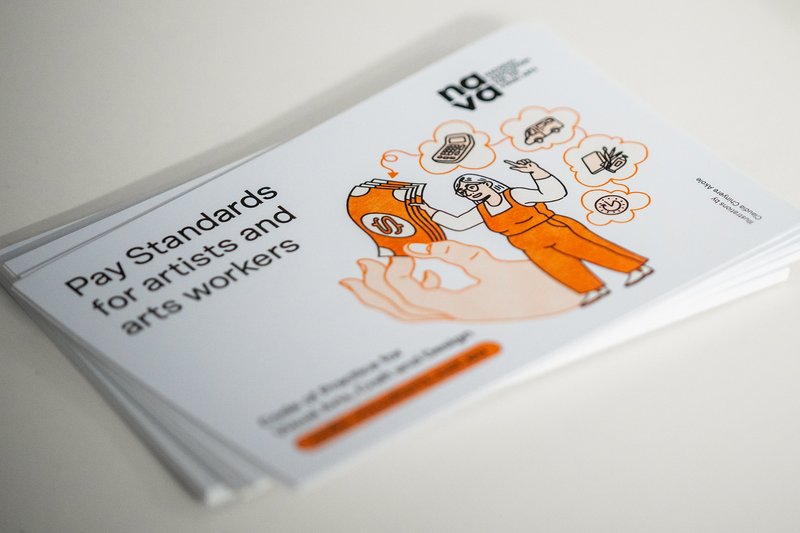
Photo by Leeroy Todd Photo and Film, 2024.
ID: A stack of NAVA Pay Standards for artists and arts workers postcards sits on a white surface. The card is white and features a bright orange graphic illustration of a person standing beside a large hand holding orange cash notes, surrounded by icons representing budgeting, travel, materials and time. The NAVA logo appears at the top right of the postcard.


© Copyright 2026. All Rights Reserved.