Payment Standards updated and new guidance added to the Code
NAVA's annual Code of Practice review brings a 4.75% increase to Payment Standards, new guidance for artist parents and carers, expanded accessibility content and Auslan resources.
NAVA's annual Code of Practice review brings a 4.75% increase to Payment Standards, new guidance for artist parents and carers, expanded accessibility content and Auslan resources.
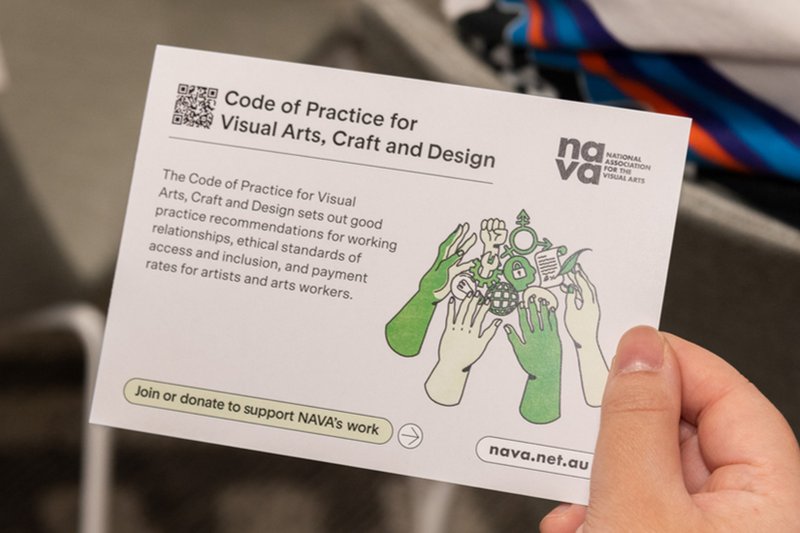
NAVA has today added a range of updates to the Code of Practice for Visual Arts, Craft and Design (the Code), including increased Payment Standards, new guidance supporting artist parents, carers, and support workers, additional Auslan resources and updates to legislative information.
The annual review helps ensure the Code continues to reflect current industry practice, legal developments and the needs of artists, arts workers and organisations across the visual arts, craft and design sector.
From 1 July 2026, most rates within the Code's Payment Standards have increased by 4.75%, following the Fair Work Commission's 2026 Annual Wage Review.
The increase reflects NAVA's commitment to ensuring artists and arts workers benefit from wage growth in a manner consistent with workers in other industries. It also aligns with the Australian Government's recognition through Revive that art is work and artists are workers.
Over the past two years, NAVA applied increases below the Fair Work Commission's award wage determinations in recognition of the significant funding pressures facing the visual arts sector, where many government funding programs receive little or no indexation. While this supported implementation of the Payment Standards across the sector, it also contributed to a growing gap between recommended artist rates and broader wage growth.
The updated rates apply to new contracts, agreements and engagements entered into from 1 July 2026. In some cases, existing contracts entered into before that date may continue at the rates agreed when those arrangements were made. NAVA recognises that exhibitions, commissions and touring projects are often planned and budgeted years in advance, making annual increases difficult to absorb where funding remains fixed. This is particularly challenging for touring projects, where artist fees may be locked into funding agreements several years before presentation.
As the Payment Standards are reviewed annually, organisations should use current rates and make reasonable provision for future increases when preparing multi-year budgets, funding applications and contracts. Appropriate funding indexation remains essential to supporting sustainable implementation of the Code.
This year's update also introduces indicative childcare allowances to assist organisations in budgeting for artist parents' participation costs, and benchmark rates for life models drawn from the Life Models Society.
A new Parenting section has been added to the Code, encouraging organisations to support participation through flexible working arrangements and project timelines, recognising childcare as a legitimate project expense, adopting family-friendly approaches to meetings, residencies and public programs, and ensuring workplaces remain safe where children are present.
The section also acknowledges diverse family structures and cultural contexts, including the importance of intergenerational cultural knowledge sharing for First Nations artists and arts workers.
Additionally, the Access Rights for d/Deaf and Disabled People section has been expanded to better recognise the role of carers and support workers in creative practice. The updated guidance acknowledges that artists and arts workers may themselves have caring responsibilities requiring flexibility in project planning, scheduling and workplace arrangements. It also recognises the important role carers and support workers play in enabling participation by d/Deaf and Disabled artists and arts workers, while providing guidance on how care, support, collaboration and authorship may intersect within professional arts practice.
Nine additional sections of the Code are now accompanied by Auslan interpretations of their Summary of Good Practice Recommendations, making more of the Code accessible to Deaf artists and arts workers. The new Auslan clips cover:
A number of additional improvements have been made throughout the Code. These include fixing broken links, adding new recommended resources, and small updates to the Superannuation section within the Payment Standards and Freedom of Expression section within the Principles, Ethics and Rights chapter to reflect recent legislative changes.
Photo by Garry Trinh 2026.
ID: A close-up photo of a person's hands holding a printed card featuring NAVA’s Code of Practice for Visual Arts, Craft and Design.

© Copyright 2026. All Rights Reserved.