Reconciliation Action Plan Progress Report September 2024 - December 2025
An update on NAVA’s progress against our RAP commitments.
An update on NAVA’s progress against our RAP commitments.
NAVA’s Innovate Reconciliation Action Plan (RAP) launched in November 2024, outlining our commitments for the period September 2024 - September 2026. NAVA’s vision is for a vital, sustainable and ethical contemporary arts sector where First Nations arts and culture is at the core. Our vision for reconciliation centres principles of First Nations self-determination and story sovereignty, supported by broad and thriving networks of Aboriginal and Torres Strait Islander artists, arts workers and leaders.
This vision is pursued through collaborative work with First Nations colleagues to support culture bearers, artists, organisations, communities, and knowledges across all of NAVA’s advocacy, learning and Membership services.
The report below highlights NAVA’s progress against RAP commitments from September 2024 - December 2025.
Build relationships through celebrating National Reconciliation Week (NRW)
In 2025, NAVA celebrated National Reconciliation Week under the theme ‘Bridging Now to Next’. In a news article, we highlighted the importance of ongoing learning, encouraging artists, curators, and institutions to engage with First Nations-led resources, including NAVA’s Code of Practice chapters on First Nations guidelines and working with First Nations Art Centres. To promote the article, we licensed an image from Kaylene Whiskey & the Iwantja Young Women’s Film Project, Kungka Kunpu (2019).
NAVA staff also participated in external NRW events, such as PICA Art Talks: Second Generation Collective at the Perth Institute of Contemporary Arts.
Promote positive race relations through anti-discrimination strategies
NAVA staff were encouraged to engage in First Nations-led events during Reconciliation Week, National Reconciliation Week, NAIDOC Week, and throughout the year more broadly. Staff are allocated a $100 annual allowance to support attendance at these events.
NAVA commissioned First Nations artists such as Barkindji, Wakka Wakka, Latjilatji, and Biri Gubba artist Emily Johnson for various illustrations, including The Code of Practice Consultation on Carers and Support Workers, the Code of Practice Consultation on Parenting in the Arts, and AusArt Day Campaign fundraising for the Deputy Director of First Nations Policy and Advocacy role. NAVA also commissioned Yuwi, Torres Strait and South Sea Islander artist Dylan Mooney to create an image for NAIDOC Week, publishing his artist’s statement on how the artwork responded to the theme of ‘The Next Generation: Strength, Vision & Legacy’.
NAVA met with sector partners including the Copyright Agency and Museums and Galleries NSW (MGNSW) to discuss shared RAP goals and opportunities for collaboration.
Increase understanding, value and recognition of Aboriginal and Torres Strait Islander cultures, histories, knowledge and rights through cultural learning
NAVA developed a Cultural Learning Strategy, outlining our commitments to improving cultural safety and competency, anti-discrimination awareness, and centering First Nations artists and perspectives. This work is guided by NAVA’s First Nations Policy, which supports lifting the level of cultural competency across the organisation, safer and more supportive employment for First Nations staff, and stronger engagement with First Nations artists, arts workers, and organisations.
First Nations Directors on NAVA’s Board undertook governance and leadership professional development through Australian Indigenous Governance Institute (AIGI).
In early 2025, the NAVA team participated in a Koori Kinnections cultural training day, including a guided cultural bush walk, shared lunch made with local First Nations ingredients, and a yarning and weaving session.
Demonstrate respect to Aboriginal and Torres Strait Islander peoples by observing cultural protocols
NAVA staff, Board Directors and the artists we represent are based across hundreds of sovereign nations and unceded lands throughout the continent now known as Australia. NAVA developed a cultural protocol document that identifies the Traditional Lands staff work on, and have collates resources on local acknowledgement preferences and histories.
Acknowledgement Country is included at weekly staff meetings and other formal meetings, and staff also include an Acknowledgement in their email signatures.
Implement good practice in relation to First Nations engagement within our organisation’s programs and resources
NAVA’s First Nations Outreach Coordinator presented talks and workshops at BL:AK Camp (QLD), Barangga (NSW), ICIP workshop with ArtsLaw (SA), Revealed Exhibition and Art Market (WA), Saltwater Freshwater Artist Forum (NSW), and NGA Dhiraamalang Indigenous Leadership Program (ACT). They also held a stall at Cairns Indigenous Art Fair (QLD) and Darwin Aboriginal Art Fair (NT).
Additionally, NAVA commissioned Merindah Funnell and Gordon Hookey to design new stickers and a tote bag; a new guide, ‘Building Strong First Nations Advisory Groups’, by Nadine Lee; and an Educator Guide for NAVA’s Teacher Toolkit, ‘Introduction to Committing to Meaningful First Nations Projects in Education Settings’, by Dr Emma Hicks in consultation with Dr Christine Evans and edited by Jo Higgins.
Throughout the year, the First Nations Outreach Coordinator, had over 200 one-on-one professional development sessions with First Nations artists and arts workers from across the continent, sharing the Code of Practice and tailored advice.
From September 2024 - December 2025, NAVA’s Artist Files video series featured four Aboriginal and Torres Strait Islander artists: Dylan Mooney, Alfred Lowe, Merindah Funnell, and Libby Harward.
NAVA also commissioned Savannah Travia Dunn to document the NAVA stall at Revealed in Boorloo in April 2025.
Build respect for Aboriginal and Torres Strait Islander cultures and histories by celebrating NAIDOC Week
NAVA staff were encouraged to attend NAIDOC week events locally and online, with event links shared internally via email and reminders about the $100 event allowance. Events some staff attended included the exhibition Yolŋu power: the art of Yirrkala at the Art Gallery of New South Wales, and the Carriageworks NAIDOC Solid Ground Exhibition 2025.
Improve employment outcomes by increasing Aboriginal and Torres Strait Islander recruitment, retention, and professional development
NAVA received continued Indigenous Visual Arts Industry Support (IVAIS) program funding for a First Nations Outreach Coordinator role, strengthening support, resources and professional development for First Nations artists. NAVA also increased First Nations staffing through revised recruitment procedures and HR policies; members elected a new Aboriginal and Torres Strait Islander Representative to the Board; and retained two First Nations Board Directors in other roles.
Establish and maintain an effective RAP Working group (RWG) to drive governance of the RAP
NAVA’s RAP Working Group (RWG) currently includes all NAVA staff, who meet fortnightly to work together on RAP deliverables. RAP updates are also embedded into weekly team meetings. NAVA is in the process of expanding the RWG to include First Nations NAVA Members, external stakeholders, and First Nations representatives on the NAVA Board. This expanded group will play a key role in consultation on initiatives such as the development of NAVA’s anti-discrimination policy. A Terms of Reference has been established, with remuneration for external First Nations representatives set at $120 per hour.
Support effective implementation of RAP commitments
NAVA has allocated a staff training budget; an artist budget for any First Nation commissions; and ongoing allowances for staff to attend First Nations events, exhibitions, and workshops.
Opportunities for training and learning, particularly in cultural competency and anti-racism are regularly shared through team meetings, emails and internal briefings. NAVA has also renewed its license for the AIATSIS Core: Cultural Learning - Aboriginal and Torres Strait Islander Australia Foundation Course, enabling staff to continue learning at their own pace.
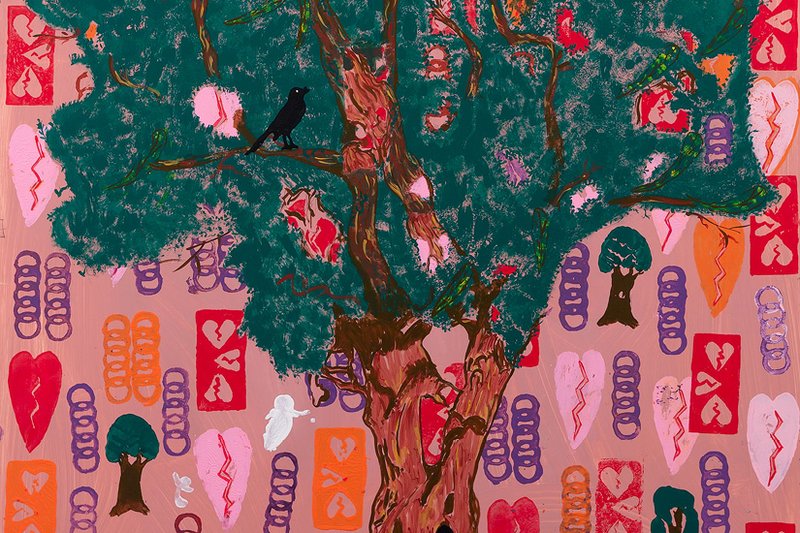
Pitcha Makin Fellas (Trudy Edgeley, Gimuy Walubarra Yidinji; Alison McRae, Dja Dja Wurrung, Gunditjmara and Yorta Yorta; and Ted Laxton, Gunditjmara), ‘Why Don’t Whitefellas Like Trees?’ 2022, synthetic polymer paint on foamboard, 260 x 156 cm. Monash University Collection, Naarm/Melbourne. Photograph by Christian Capurro.
ID: The painting consists of a large tree in the middle on a pink background which is dotted with hearts, small trees, and other designs. There are 2 crows positioned on the tree branches within.
The National Association for the Visual Arts (NAVA) is a national organisation with staff who work across many First Nations Lands. The NAVA Board and artists whom we represent are based across hundreds of sovereign nations and unceded lands throughout the continent that has become colonially known as Australia.
NAVA acknowledges the Traditional Owners, Custodians, and knowledge-holders of the unceded lands on which we live, learn, and work.
We acknowledge Aboriginal and Torres Strait Islander peoples as the first artists and storytellers on this continent and pay respect to First Nations communities’ Ancestors and Elders. Sovereignty was never ceded. Always was, always will be Aboriginal land.

© Copyright 2026. All Rights Reserved.