Why and how to make a submission to the National Cultural Policy consultation
NAVA-led sector discussion notes are now available to help inform National Cultural Policy submissions. Submissions close 24 May 2026.
NAVA-led sector discussion notes are now available to help inform National Cultural Policy submissions. Submissions close 24 May 2026.
The Australian Government is currently consulting on the next iteration of the National Cultural Policy, building on Revive: a place for every story. This is another important opportunity for the visual arts, craft and design sector to identify what needs to change and to push for stronger policy settings that improve conditions of work and practice.
While the current policy recognises artists as workers, many structural issues remain unresolved. Underpayment, unpaid labour, insecure income, rising costs, lack of affordable space, uneven access to opportunities, and limited long-term support continue to affect artists and arts workers across the sector.
It is important that the policy recommendations for the visual arts, craft and design sector are clearly explained through this consultation process. We should not assume that the people reading submissions understand how this sector operates, what makes it distinct from other artforms, or where the current gaps and challenges sit. The more clearly these experiences are explained, the more likely they are to inform future policy.
NAVA encourages artists, arts workers, organisations, artist-run initiatives, educators, curators, studios, collectives and networks to make a submission if they can. Strong participation matters. When governments receive large numbers of submissions from across a sector, it helps demonstrate both the scale of concern and the level of engagement around particular issues.
Submissions do not need to be long, highly formal or written in policy language. This consultation is not asking people to justify the existence of the arts. It is asking what needs to change.
You may want to focus on practical issues affecting your work or community. This could include fair and consistent pay, superannuation and tax reform, affordable studio and live/work spaces, access to infrastructure and equipment, support for First Nations-led practice and leadership, arts education and stronger career pathways, long-term funding, AI and copyright protections, climate impacts, or increasing pressures around censorship and freedom of expression.
To support participation in the consultation, NAVA has developed and compiled these resources:
The below discussion notes bring together key themes, concerns and recommendations raised during NAVA’s April 2026 visual arts sector discussions. They are intended to support artists, arts workers and organisations to identify recurring issues across the sector and assist in developing their own submissions.
Thank you to everyone who contributed to these discussions and broader consultation process. The generosity, honesty and expertise shared by artists, arts workers and organisations across these conversations has helped inform the recommendations and themes outlined in these notes.
The visual arts sector continues to be sustained by enormous amounts of labour, advocacy, care and community knowledge, often under difficult conditions. We are grateful to everyone who took the time, and continues to make time, to contribute their experiences, priorities and ideas to this process.
There are two main ways to participate in the consultation. You can either:
Both approaches are valid. Some people prefer the structure of the template, while others find it easier to write freely in their own format.
You do not need to respond to every question or every policy pillar. It is completely acceptable to focus only on the areas most relevant to your experience and practice.
The consultation is structured around five pillars:
You may find it useful to connect your ideas or recommendations to one or more of these areas, but this is not essential.
If you are writing your own submission, it can be as short as a few paragraphs. Clear and direct writing is often the most effective. Real examples from lived experience can help explain why reform is needed and how current systems affect artists and arts workers in practice.
Submissions can also be made in alternative formats, including audio or video.
The consultation form asks for:
The Office for the Arts has indicated that AI tools may be used for administrative tasks, summarising submissions and identifying recurring themes, with oversight by staff. This makes clarity especially important. Submissions that clearly explain issues, use practical examples and articulate specific recommendations are more likely to help identify patterns and priorities across the sector.
If your submission is public, avoid including personal information you do not want published online.
Consultation submissions close at 11:59pm on 24 May 2026.
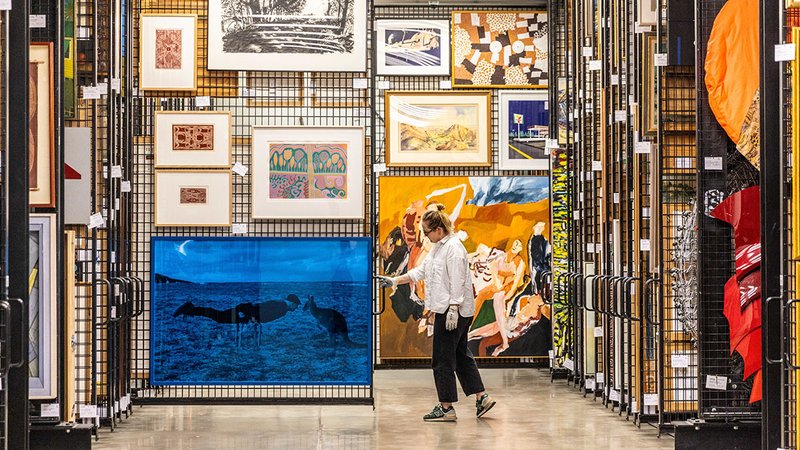
Artbank collection storage facility in Sydney NSW.
ID: A person wearing white gloves walks through an art storage facility, surrounded by tall metal grid racks displaying a diverse collection of framed paintings and photographs.


© Copyright 2026. All Rights Reserved.