Notes from NAVA Workshop for National Cultural Policy: Pay the Artist

In April 2026, NAVA hosted three online workshops with artists, arts workers and organisations from across the visual arts, craft and design sector to inform submissions to the Federal Government’s consultation on the next National Cultural Policy, which is open until 24 May 2026. 

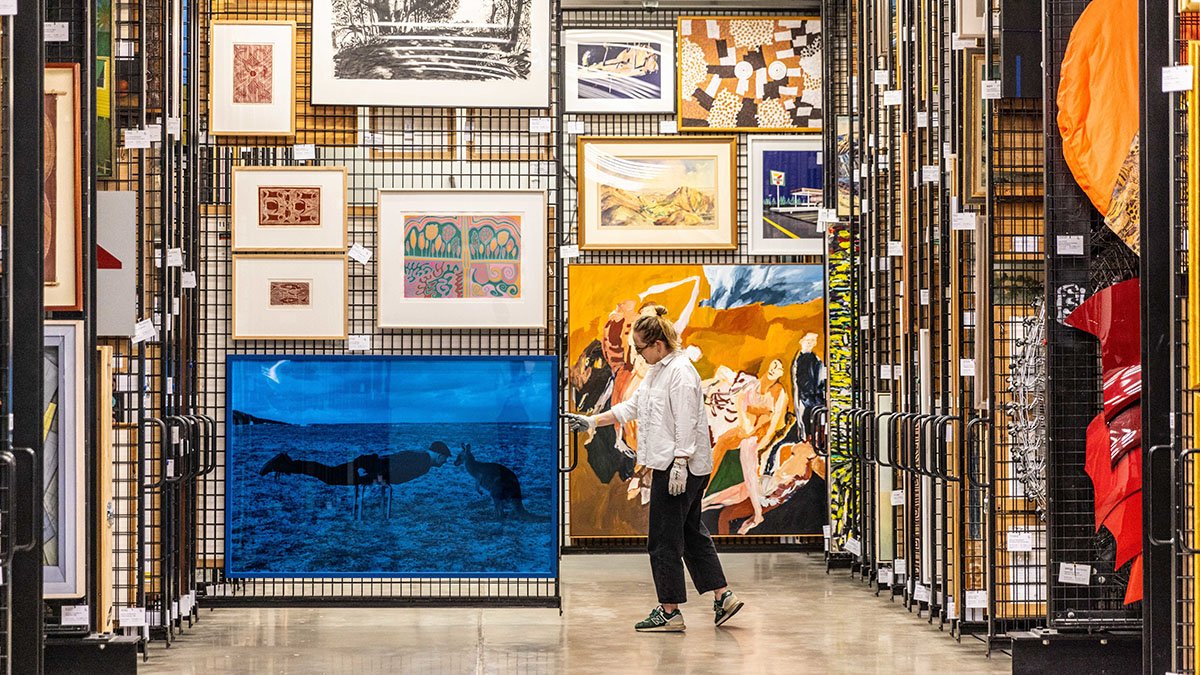
Photo of a person pulling out large artwork storage racks.

Artbank collection storage facility in Sydney NSW.

This workshop focused on the conditions that support the making and presentation of visual arts, craft and design practice. Discussion covered touring, arts education, regional access, tax reform, arts infrastructure, climate impacts, AI, advocacy and industry standards. The following notes bring together key themes, concerns and recommendations raised during the discussion.

This workshop was facilitated by Imogen Beynon, Director on NAVA's Board, Senior National Industrial Officer at the National Tertiary Education Union (NTEU) and a PhD candidate at RMIT University, with an introduction by Susan Templeman MP, Special Envoy for the Arts. 

The following notes bring together key themes, concerns and recommendations raised during the discussion and are intended to support artists, arts workers and organisations preparing submissions to the National Cultural Policy consultation.

Workshop recommendations

  • Exempt art prizes, fellowships and government grants from income tax and reform Non-Commercial Loss rules, GST obligations and HECS/HELP repayment settings to better support artists with fluctuating incomes.
  • Property and tax reforms to support affordable artist studios and residencies, including incentives for landlords to lease vacant or underused properties as creative workspaces and tax deductions for living costs associated with artists' residencies.
  • Embed stronger social security, welfare and income support systems for artists and arts workers operating outside traditional employment frameworks, including consideration of basic income and living wage models for artists.
  • Mandate artist remuneration standards across publicly funded visual arts activity, including minimum rates, consultation fees, regional loading and recognition of hidden and administrative labour.
  • Reform superannuation laws to ensure artists are paid superannuation when they are engaged for their labour, including exhibitions, commissions, talks, workshops, residencies and other forms of professional artistic work, and clarify obligations under the Superannuation Guarantee (Administration) Act 1992 (Cth).
  • Require dedicated superannuation line items within grant applications and strengthen education around artists’ workplace rights, contracts, taxation and entitlements.
  • Expand the Cultural Gifts Program and introduce tax incentives to encourage galleries, businesses and collectors to acquire and support work by living Australian artists, particularly emerging artists.
  • Introduce legislated protections for artistic freedom and freedom of expression, recognising the role of artists in public debate and protecting lawful artistic work from censorship, disproportionate sanction and self-censorship driven by fear of legal or reputational consequences.
  • Embed arts education as a key commitment in National Cultural Policy, including sustained investment in tertiary arts education, vocational pathways and professional development.
  • Create a nationally coordinated arts funding strategy that improves consistency, accessibility and long-term sustainability across Federal, State and local government funding systems.
  • Commit to ongoing investment in local visual arts infrastructure, including council-owned exhibition spaces, shared studios, regional arts networks and community artmaking spaces.
  • Introduce targeted measures addressing gender inequality within the visual arts sector, including equal representation in acquisitions, exhibitions and leadership opportunities.
  • Develop a national arts strategy addressing AI, copyright infringement, online harms and the misuse of artists’ work in digital environments.
  • Recognise arts and culture as essential climate infrastructure and increase support for artist-led responses to climate change and natural disasters, including dedicated funding for First Nations-led initiatives.
  • Establish dedicated disaster preparedness, recovery and resilience funding for cultural infrastructure, including artist studios, archives, collections, community art spaces and locally run arts organisations affected by climate change and natural disasters.

Discussion

Financial precarity, income and tax reform 

Artists and arts workers described ongoing financial instability across all stages of practice. Many spoke about irregular income, unpaid labour, rising costs and the pressure of trying to sustain both creative practice and paid work simultaneously.

Self-represented artists are often required to undertake a portfolio of roles beyond artmaking itself, including administration, marketing, social media, exhibition installation, sales, grant writing, acquittals, contract negotiation, budgeting and advocacy. Much of this work is unpaid, unrecognised and administratively demanding.

Several participants described feeling permanently “on call” in their work, particularly in regional areas where artists and arts workers are expected to maintain community relationships, travel long distances, manage freight, advocate for their sector and remain constantly visible online, often without overtime, time-in-lieu or additional support.

Relationship-building, consultation, networking, cultural advocacy and “thinking time” were repeatedly identified as forms of labour that remain largely unpaid despite being essential to sustaining practice and delivering projects.

Many artists also described feeling pressured to accept unpaid work in order to maintain relationships, secure future opportunities or remain visible within the sector. Volunteering was described as increasingly replacing properly funded arts infrastructure, with some participants questioning where the line sits between genuine mutual exchange and exploitation.

Participants raised concern about tax and welfare systems that penalise artists with fluctuating incomes. One-off grants, prizes or project payments can trigger disproportionate tax liabilities, HECS/HELP repayments or changes to welfare eligibility despite long periods of low earnings.

The growing shortage of affordable artist workspaces needs to be addressed through targeted property and tax reform, including incentives for landlords to lease vacant or underused properties as artist studios, rehearsal spaces and creative workspaces. Participants identified affordable space as a major barrier to sustaining visual arts practice, particularly in metropolitan areas where rising rents and redevelopment are displacing artists and artist-run initiatives. Improved support for residencies, including tax deductions for living costs associated with residencies and research-based practice, was also identified as important for sustaining artistic development and long-term practice.

Fear and confusion around taxation was also identified as a significant issue. Artists described tax compliance as intimidating and difficult to navigate without specialist support, with many relying on informal advice from peers rather than accessible public guidance.

Participants also pointed to JobKeeper as an example of how stable income support allowed artists to continue making work, reduce burnout and plan beyond immediate survival.

There was strong support for reforms including:

  • exemption of art prizes, fellowships and government grants from income tax;
  • property and tax reforms to support affordable artist studios, residencies and creative workspaces, including incentives for landlords to lease vacant or underused properties to artists at below-market rates;
  • tax deductions for living costs associated with artist residencies and research-based practice;
  • reform of Non-Commercial Loss provisions for artists meeting the ATO’s “in business” test;
  • improved access to income averaging provisions;
  • clearer mechanisms to claim for artwork donations to fundraisers;
  • GST reforms for low-income artists;
  • more flexible HECS/HELP repayment settings with income averaging over 5 years;
  • reintroduce a NEIS-style scheme tailored to artists and creative practitioners, including income support, mentoring, business development, HECS debt relief mechanisms and start-up assistance for materials and equipment;
  • deductions for residency and cultural development costs;
  • tax incentives for property owners to open up empty spaces for artists studios;
  • and stronger superannuation protections for artists.
Fair pay, superannuation and industrial protections

Participants described a sector where unpaid and underpaid labour has become normalised across large parts of the visual arts industry.

Artists spoke about unpaid grant writing, committee work, consultation, public programming, mentoring, travel, installation, freight coordination and community engagement becoming expected parts of professional practice. Several participants noted that organisations, local governments and funding bodies frequently rely on artists contributing unpaid labour in order for projects to proceed within existing budgets.

There was concern about inconsistent industrial protections across the sector, including sham contracting, unpaid overtime, lack of time-in-lieu arrangements, superannuation non-compliance and inconsistent application of awards and contracts.

Participants described the visual arts sector as lacking consistent enforcement around wages, entitlements and workplace obligations. Some also raised concern about organisations understating their scale or capacity in order to pay lower artist fees under the NAVA Code of Practice, including council galleries identifying themselves as “micro-organisations” - a category designed for volunteer artist-run initiatives (ARIs) despite operating within larger local government structures.

Consultation and cultural labour were repeatedly identified as areas where artists are expected to contribute expertise without appropriate remuneration. Participants stressed that consultation, relationship-building, advocacy and cultural engagement must be recognised as legitimate forms of labour within funding and contracting structures.

Artists are often unaware they can request superannuation on top of artist fees, while the complexity of current superannuation arrangements is administratively difficult for smaller organisations and sole traders. Superannuation is also frequently treated as expendable when projects are under financial pressure.

Participants called for reform to superannuation legislation to ensure artists are paid superannuation when engaged for their labour, including exhibitions, commissions, workshops, talks, residencies and other professional artistic activity.

There were calls for: 

  • mandatory minimum artist fees aligned with the NAVA Code of Practice;
  • superannuation paid on top of artist fees;
  • recognition of consultation and administrative labour;
  • regional loading for travel and freight;
  • dedicated superannuation line items within grant applications; and 
  • stronger enforcement of workplace rights and entitlements across publicly funded activity.

Freedom of expression

Concern was raised about increasing self-censorship across both artistic practice and programming, with artists and organisations becoming more cautious about presenting politically sensitive, experimental or challenging work.

Some artists described feeling exposed to online harassment, reputational attacks and public scrutiny without clear institutional support or access to legal, communications or wellbeing expertise. It was noted that this burden often falls most heavily on artists from marginalised communities, including artists whose work addresses racism, colonisation, disability, gender or other forms of structural inequality.

Australia lacks clear and consistent legal protections for artistic freedom and freedom of expression, creating uncertainty for artists and organisations navigating controversial work across different jurisdictions and regulatory environments. This was identified as contributing to fear, risk-aversion and reluctance to support challenging artistic practice.

Discussion raised the importance of protecting artistic freedom and civic space, including the role of artists in contributing to public debate, critique and cultural dialogue.

Participants identified the need for:

  • stronger protections for freedom of expression;
  • clearer guidance for navigating controversy, online harassment and reputational risk;
  • stronger institutional responsibility for supporting artists during periods of controversy;
  • improved wellbeing and safety support for artists and arts workers; and
  • access to coordinated legal, communications and crisis-response support.

Arts education and workforce sustainability

Participants described arts education as foundational to the long-term sustainability of the visual arts sector.

There was strong concern about the ongoing decline of arts education and training across schools, TAFEs and universities, alongside the closure of Creative Arts programs and increasing barriers to participation. Participants noted that without sustained investment in arts education, the sector risks weakening future pathways into artistic practice, technical work, arts administration and cultural leadership.

Many artists and arts workers also described a lack of accessible education around contracts, taxation, business management, industrial rights and superannuation, leaving practitioners unsure how to advocate for themselves within professional contexts.

Participants stressed that arts education should not be treated as optional, but as essential cultural infrastructure for the future workforce, future audiences and the broader cultural life of the country.

There was support for:

  • embedding arts education as a key commitment within the National Cultural Policy;
  • sustained investment in tertiary arts education and vocational pathways;
  • stronger connections between education and professional practice;
  • greater support for regional access to arts training;
  • and expanded professional development opportunities across the sector.

Gender inequality and caring responsibilities

Women continue to make up a significant proportion of the visual arts workforce, yet remain underrepresented in acquisitions, institutional collections, leadership positions and senior decision-making roles.

Participants described ongoing gender inequality across pay, career progression and access to opportunities. Women were also identified as carrying disproportionate levels of unpaid labour within both professional and domestic settings, including administration, care work, volunteer labour and community support roles.

Career interruption associated with parenting and caring responsibilities continues to have long-term impacts on income, visibility and career sustainability. Participants noted that periods away from exhibiting, travelling or networking can significantly affect future opportunities, particularly within competitive funding and commissioning environments that reward continuous visibility and productivity.

There were calls for targeted measures addressing gender inequality across the visual arts sector, including:

  • equal representation in acquisitions, exhibitions and leadership opportunities;
  • greater recognition of caring responsibilities within funding and employment structures;
  • more flexible timelines and eligibility requirements;
  • and targeted investment supporting the long-term financial stability of women, non-binary and gender diverse artists and arts workers.

Regional access and infrastructure

Participants described isolation and burnout as widespread across the sector, particularly for independent artists and those working in regional, rural and remote communities.

Many artists spoke about the emotional toll of continually advocating for fair pay, negotiating contracts, managing administrative work and sustaining practice without stable infrastructure or support networks.

For regional artists and arts workers, isolation was often compounded by geography. Participants described significant unpaid labour associated with travel, freight, installation logistics and maintaining professional visibility across large distances. Access to grant opportunities, arts training and peer networks was described as uneven, particularly outside metropolitan centres.

Independent artists also spoke about the psychological impacts of working in isolation, including uncertainty around pricing work, negotiating contracts and navigating industry expectations without access to professional support or shared workspaces.

Participants stressed the importance of local arts infrastructure, including shared studios, community artmaking spaces, council-owned exhibition venues and regional arts organisations. These spaces were described not only as sites of artistic production, but as essential community infrastructure supporting connection, professional development and wellbeing.

It was also noted that local artists are frequently relied upon to deliver community cultural activity without adequate support or remuneration, despite the important social and cultural role this work plays.

Recommendations included:

  • ongoing investment in regional arts infrastructure and networks;
  • subsidised studio and community artmaking spaces;
  • long-term funding for council-owned and operated galleries and exhibition spaces;
  • and greater support for artists ageing within the sector, including affordable access to creative spaces and community programs.

AI, digital platforms and online harm

Participants described AI as both a growing threat and a source of deep uncertainty across the visual arts sector. Artists should not be expected to individually monitor, enforce or litigate against large-scale misuse of their work online.

Artists raised concern about the scraping, reproduction and commercial use of artwork without consent, attribution or payment. Many noted that maintaining an online presence has become professionally necessary, while simultaneously exposing artists to misuse of their work, scams, impersonation and unauthorised reproduction.

Participants also raised concern about the impact of AI on arts education and training, particularly where students are increasingly directed toward automated tools rather than specialist teaching, studio-based learning and professional mentorship.

Social media platforms were described as increasingly hostile and unstable environments for artists attempting to build sustainable audiences and income streams. Participants reported ongoing experiences of account cloning, scam activity, bot harassment and online abuse, particularly during exhibition periods or moments of increased visibility.

There was strong support for:

  • a national arts strategy addressing AI, copyright infringement and online harm;
  • stronger protections around the use of artists’ work in AI training datasets;
  • greater transparency from AI developers and digital platforms;
  • public education around artists’ rights in digital environments;
  • and stronger regulation addressing scams, impersonation and unauthorised reproduction of creative work.

Climate change and and cultural resilience

Artists are already responding to climate change through community engagement, storytelling, disaster recovery and place-based cultural practice.

Concern was raised about the growing physical impacts of climate change on cultural infrastructure, including damage to studios, collections, archives and community spaces.

Artists spoke about the role of culture in helping communities process grief, uncertainty and environmental change, particularly following floods, fires and other climate-related disasters. First Nations artists were identified as playing a particularly important role in maintaining and sharing cultural knowledge connected to Country, care and adaptation.

There was strong support for formally recognising arts and culture as essential climate infrastructure within the National Cultural Policy. Artists are already undertaking significant climate-related work without adequate long-term support or coordination.

Climate policy should not treat arts and culture as peripheral to climate response. Arts organisations, community spaces and cultural networks were described as important sites of social connection, communication and recovery during times of crisis.  

Recommendations include:

  • dedicated funding streams for culture-led climate action;
  • integration of arts and culture into national climate governance and adaptation planning;
  • increased support for artist-led climate and disaster response projects;
  • sustained investment in First Nations-led climate initiatives, including projects such as Knowledge Keepers and Common Threads; and
  • dedicated disaster preparedness, recovery and resilience funding for cultural infrastructure, including artist studios, archives, collections, community art spaces and locally run arts organisations affected by climate change and natural disasters.

Funding structures and policy coordination

Participants described current funding systems as fragmented, competitive and administratively burdensome, with short-term project funding models contributing to ongoing precarity for both artists and organisations. 

Discrepancies between Federal, State and local government funding models were described as creating unnecessary complexity, duplicated reporting and inconsistent expectations across the sector.

Participants noted that many funding programs rely on artists contributing unpaid labour in order for projects to remain financially viable. This included unpaid public programming, workshops, talks, consultation, research and project development work.

Many artists also described funding structures as poorly aligned with the realities of artistic practice. Research and development, community engagement, process-based work and long-term relationship-building often fall outside standard funding criteria despite being central to how many artists work.

Participants raised concern that grant programs frequently exclude core operational costs, wages and commercial activity associated with sustaining practice, limiting the long-term viability of both artists and small organisations.

Participants also stressed that publicly funded activity should not rely on unpaid labour in order to function.

There were calls for:

  • a more coordinated national funding framework aligned across Federal, State and local governments;
  • longer-term and less administratively burdensome funding models;
  • greater consistency in eligibility, reporting and assessment processes;
  • and stronger compliance mechanisms requiring publicly funded organisations to meet minimum remuneration standards under the NAVA Code of Practice.