Notes from NAVA Workshop for National Cultural Policy: Conditions of Practice

In April 2026, NAVA hosted three online workshops with artists, arts workers and organisations from across the visual arts, craft and design sector to inform submissions to the Federal Government’s consultation on the next National Cultural Policy, which is open until 24 May 2026. 

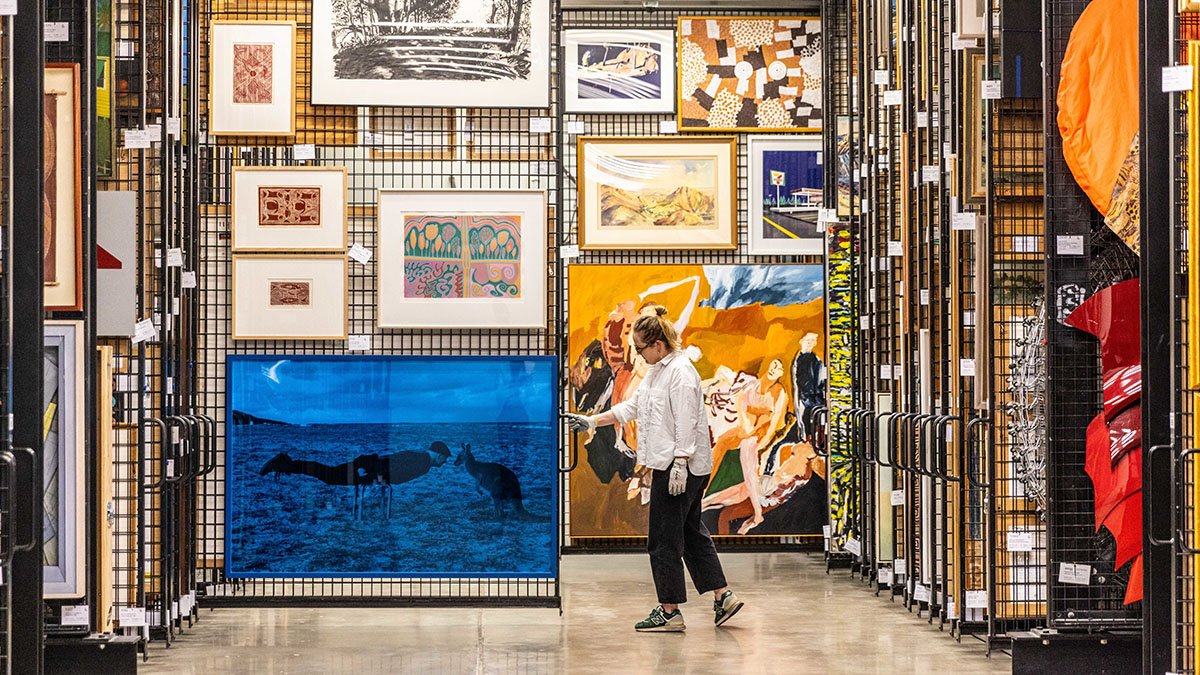
Photo of a person pulling out large artwork storage racks.

Artbank collection storage facility in Sydney NSW.

This workshop focused on the conditions that support the making and presentation of visual arts, craft and design practice. Discussion covered touring, arts education, regional access, tax reform, arts infrastructure, climate impacts, AI, advocacy and industry standards. The following notes bring together key themes, concerns and recommendations raised during the discussion.

Workshop recommendations

Industry standards, advocacy and coordination

  • Establish Visual Arts and Craft Australia to provide direct support to the visual arts, craft and design sector through audience development, strategic planning, investment attraction and sector-wide advocacy.
  • Commission a major national review of the visual arts, craft and design sector, including workforce conditions, infrastructure, funding, regional access, education pathways, audience engagement and economic and social contribution, to inform long-term national cultural policy and investment.
  • Require compliance with the NAVA Code of Practice as a condition of public arts funding to ensure minimum standards for remuneration and workplace entitlements across publicly funded visual arts activity.
  • Introduce legislated protections for artistic freedom and freedom of expression, recognising the role of artists in public debate and protecting lawful artistic work from censorship, disproportionate sanction and self-censorship driven by fear of legal or reputational consequences.
  • Invest in stronger national coordination between existing arts advocacy organisations, service bodies and regional networks, while avoiding unnecessary duplication and competition across the sector.
  • Strengthen collective advocacy capacity through more coordinated national arts representation and regional strategy development.

Access, touring and regional infrastructure

  • Establish dedicated international touring and exchange programs for the visual arts, including expansion of Visions of Australia to support international exhibition touring, cultural exchange and global audience development for Australian artists and organisations.
  • Develop a National Visual Arts Touring and Transport Strategy recognising that dedicated investment is needed both to tour artworks and to support audiences accessing regional art centres.
  • Develop more balanced touring models that support and platform regional artists alongside their metropolitan counterparts.
  • Increase investment in region-led festivals, triennials and cultural models that centre local leadership and community connection, including models such as DesertMob.
  • Boost investment in local visual arts infrastructure, including exhibition spaces, studios, regional arts networks and Community Arts and Cultural Development (CACD).
  • Support local councils to develop and implement arts and cultural policies and frameworks.

Financial sustainability, investment and tax reform

  • Introduce targeted tax reforms supporting the visual arts ecosystem, including an Exhibition Tax Relief model similar to the UK to support exhibition production, regional touring, commissioning and investment in new work.
  • Expand the Cultural Gifts Program and introduce tax incentives to encourage galleries, businesses and collectors to acquire and support work by living Australian artists, particularly emerging artists.
  • Introduce tax and planning incentives encouraging developers to commission and incorporate public art projects.

Arts education and workforce pathways

  • Embed arts education as a key commitment within the National Cultural Policy, with clear national targets, cross-portfolio coordination and sustained investment pathways.
  • End the Job-ready Graduates (JRG) program and reinvest funding into tertiary arts education and training providers.
  • Embed self-employment, business and entrepreneurship training within arts education and professional development pathways.
  • Create national paid internship, traineeship and residency pathways linking students, galleries, councils, artists and community arts organisations.
  • Establish government-funded post-degree grants or low-interest loan schemes to support graduates with materials, equipment and early-career practice costs.
  • Implement cross-portfolio partnerships between the arts, health and education sectors, including dedicated funding for artist residencies, public programs and community-based cultural projects.

Climate, sustainability and resilience

  • Recognise arts and culture as essential climate infrastructure within national climate policy and adaptation planning.
  • Increase support for artist-led climate and disaster response projects, including dedicated funding for First Nations-led initiatives and community-based climate work.
  • Establish dedicated resilience and recovery funding for cultural infrastructure affected by climate events, including studios, collections, archives and community arts spaces.

Discussion

Industry standards, advocacy and coordination

Participants described the visual arts sector as increasingly fragmented, with limited coordination across advocacy organisations, funding systems and regional networks. Many noted that the sector is operating under sustained pressure following years of declining investment relative to rising costs, alongside growing expectations from audiences, communities and governments. Participants described widespread burnout across artists, arts workers and organisations, with many operating beyond capacity while attempting to maintain programs, infrastructure, advocacy and community engagement with limited resources.

This fragmentation was seen as reducing the sector’s ability to advocate collectively, demonstrate economic and social value, and respond strategically to issues such as climate change, AI, inflation and artistic freedom.

The absence of recent comprehensive national research into the visual arts, craft and design sector makes it difficult to demonstrate the scale, workforce conditions, infrastructure needs and broader economic and cultural contribution of the sector to governments and the public. There was strong support for a major national study bringing together data on artists, arts workers, organisations, audiences, education pathways and regional conditions, including dedicated analysis of First Nations practice and cultural production. Participants stressed that stronger evidence and sector-wide data are essential for long-term policy development, advocacy and investment planning.

Peak bodies were identified as playing a critical role in establishing and maintaining industry standards, supporting artists and arts workers to advocate for fair remuneration and workplace conditions, and providing practical guidance across all stages of the artmaking process.

However, participants noted that the NAVA Code of Practice is frequently ignored or treated as optional by employers, commissioning bodies and publicly funded organisations. There were calls for stronger compliance and accountability mechanisms tied to public funding.

Participants discussed the increasing pressure placed on arts organisations when media attention or coordinated complaints arise around artworks or programming. While exhibitions and public programs are often developed over long periods of time, many organisations reported feeling unprepared once public pressure escalates, particularly where there is limited access to legal, communications or governance expertise.

Discussion identified the need for practical tools and guidance to help organisations respond to controversy in ways that are lawful, ethical and proportionate, while maintaining confidence to support artists and uphold artistic freedom.

There is concern that fear of controversy is contributing to risk-averse programming, self-censorship and reduced willingness to support politically sensitive, experimental or challenging work. Participants noted that some organisations may withdraw or alter work not because of legal risk, but because they do not feel adequately equipped or supported to navigate controversy if it emerges. This was identified as having broader consequences for freedom of expression, diversity of perspectives, public debate and the sector’s ability to present ambitious or challenging work.

Participants also discussed the need for greater coordination between advocacy bodies, regional networks and service organisations to strengthen collective bargaining power, reduce duplication and improve long-term sector planning.

There was support for establishing a dedicated national body for the visual arts, craft and design sector within Creative Australia focused on audience development, strategic planning, advocacy and investment attraction.

The arts sector was also identified as needing a stronger voice within broader policy discussions, including around AI regulation, copyright, climate policy, education and cultural infrastructure planning. Participants stressed that artists and arts organisations must be active participants in these discussions, rather than responding after policy decisions have already been made.

There was also strong support for coordinated First Nations leadership and governance structures in response to AI and Indigenous Cultural and Intellectual Property (ICIP) issues, including First Nations-led working groups and advocacy mechanisms.
Access, touring and regional infrastructure

Participants discussed significant inequities in access to infrastructure, touring opportunities and cultural investment across metropolitan, regional and remote Australia.

Current touring models were described as heavily weighted toward metropolitan institutions and artists touring work outward to regional audiences, rather than supporting touring models generated by regional artists and communities themselves. 

Participants also discussed the lack of sustained international touring infrastructure for the visual arts sector compared with other artforms. International exhibition touring was identified as critical not only for audience development, but for long-term career sustainability, institutional partnerships and positioning Australian artists within global cultural conversations. Participants noted that major international opportunities can significantly elevate artists’ careers, yet access remains limited and uneven, particularly for independent artists, regional organisations and small-to-medium galleries. There was support for expanding existing touring frameworks, including Visions of Australia, to incorporate international visual arts touring and cultural exchange opportunities.

Participants called for more balanced touring frameworks that support regional cultural leadership and provide proper remuneration for artists involved in touring activity, even where exhibitions are not commercially profitable.

Transport and freight costs were identified as major barriers to both exhibition touring and audience access, particularly across regional and remote areas. Participants noted the need for better coordination of transport, freight and logistics across the sector, rather than organisations operating in isolation.

There was discussion about the need to consider when it is more viable to transport artworks to audiences and when investment should instead support audiences travelling to regional centres and festivals.

Region-led festivals, triennials and cultural models such as DesertMob were identified as important examples of locally grounded cultural infrastructure that support community connection, regional visibility and long-term cultural development.

Participants also highlighted the importance of ongoing investment in local arts infrastructure, including studios, exhibition spaces, community artmaking facilities, regional arts organisations and Community Arts and Cultural Development (CACD) programs.

Support for local government arts policy development was also identified as important, particularly in areas where councils play a major role in maintaining cultural infrastructure and public programming.

Financial sustainability, investment and tax reform

Participants discussed the ongoing financial instability experienced across the visual arts sector, particularly for artists and small organisations managing irregular income, rising costs and limited long-term funding opportunities.

There was strong support for targeted tax reforms designed specifically for the visual arts ecosystem, including mechanisms that support exhibition production, touring, commissioning and investment in new work.

Participants discussed the potential value of an Exhibition Tax Relief model similar to the UK, which could support galleries and organisations to commission and present ambitious new work, undertake regional touring and invest in living artists.

Financial incentives encouraging the acquisition and commissioning of work by living Australian artists were also identified as important, particularly for emerging practitioners.

Participants also raised the need for stronger incentives encouraging developers to integrate public art into building and urban development projects, alongside broader investment in cultural infrastructure at a community level.

The introduction of income support mechanisms, including basic income or NEIS-style models for artists, was discussed as a way of addressing the instability created by intermittent project-based work and unreliable income streams.

Arts education and workforce pathways

Participants expressed concern about the ongoing decline of arts education across both secondary and tertiary sectors.

Participation in school arts subjects has fallen significantly over the past decade, while tertiary arts education options have contracted due to funding cuts and the closure of creative arts degrees. Participants noted that many students enter tertiary arts study without clear understanding of the breadth of careers available within the visual arts sector beyond becoming practising artists.

There was strong support for embedding arts education as a core commitment within national cultural policy, alongside sustained investment in tertiary education providers and vocational pathways.

Participants also stressed the importance of practical professional development, including business skills, self-employment training, entrepreneurship, contracts and financial literacy.

Greater support for paid internships, traineeships, residencies and alternative entry pathways such as TAFE and community-based learning models was identified as particularly important for students from low socio-economic, regional and diverse backgrounds.

The Jobs-ready Graduates (JRG) program was widely criticised for increasing the financial burden associated with arts education and discouraging participation in creative study.

Participants also discussed the importance of stronger links between education, councils, galleries, artists and community arts organisations to support sustainable career pathways and industry preparedness.

Cross-portfolio partnerships between the arts, health and education sectors were identified as an important opportunity to expand artist employment pathways while supporting broader social and community outcomes.

Climate, sustainability and resilience

Participants described climate change as an escalating challenge affecting artists, arts workers, organisations, collections, infrastructure and communities across the sector.

Despite this, culture was seen as remaining largely absent from national climate policy and disaster planning frameworks.

Participants stressed that arts and culture should be recognised as essential climate infrastructure, particularly given the role artists play in public engagement, storytelling, community connection and cultural recovery during climate events and disasters.

Concern was also raised about the growing physical impacts of climate change on cultural infrastructure, including damage to studios, collections, archives, community facilities and regional arts spaces.

Participants noted that while some larger institutions have begun implementing sustainability targets and climate-related KPIs, broader sector support and compliance mechanisms remain inconsistent.

There was strong support for increased investment in artist-led climate and disaster response work, including sustained support for First Nations-led initiatives and community-based climate projects.

Participants also discussed the need for more accessible pathways into climate-focused arts activity, noting that many artists and communities want to contribute to climate responses but lack access to funding, networks and institutional support.

There was support for dedicated resilience and recovery funding for cultural infrastructure affected by climate events, alongside greater recognition of experimental and environmentally sustainable arts practices through awards, funding programs and public recognition initiatives.